March 16, 2026
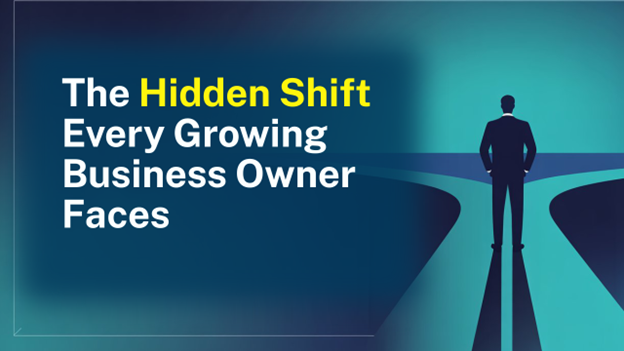
If you’re a small business owner, you probably didn’t wake up one morning and declare, “Today, I’m going to be an executive.” That would’ve required time for reflection and who has that when you’re running a business? Most entrepreneurs don’t get that luxury. One day you’re making the thing, selling the thing, fixing the thing, or delivering the service. The next day you’re managing schedules, answering payroll questions, resolving customer issues, and trying to figure out why the printer refuses to cooperate with the accounting software. Somewhere along the way, you stopped being the person who does the work and became the person responsible for making sure the work happens. This is the moment many small business owners quietly become what could best be described as the Accidental Executive. You may never call yourself a CEO. In fact, most owners of small and mid-sized businesses would laugh at the idea. But if you’re overseeing staff, coordinating multiple functions of the business, making financial decisions, and setting direction for the future, you’re already operating at an executive level whether the title exists or not. The Maker Phase Nearly every small business begins in what could be called the “maker phase.” A person has a skill, a craft, or a service people want. A baker opens a shop. A contractor starts taking on projects. A designer begins freelancing. A consultant lands their first few clients. In this phase, success comes from being good at the work itself. You’re the engine of the business. If you stop producing, the business stops moving. You’re also trading time for money and since there is a limited number of hours in the day, you can only grow so much under that structure. For many entrepreneurs, this stage feels natural. The work is familiar. The results are visible. Effort goes in and something tangible comes out. But there is another dynamic at play in those early days. Most of your first customers aren’t buying because of a sophisticated marketing plan. They buy because they know you. They trust you. Someone recommended you. Maybe they met you through a community group, a chamber event, or a mutual connection. You shake their hand. You show up personally. You solve their problem. Those early relationships become the foundation of the business. They lead to repeat customers and referrals. In the beginning, your reputation travels faster than your marketing. Then something interesting happens. Customers start showing up more often. The business grows. And suddenly you can’t do everything anymore. The First Hires Change Everything Hiring the first employee is a proud moment. It signals growth and momentum. But it also quietly shifts your role. Now someone needs direction, training, and feedback. There are schedules to approve, paychecks to process, and questions to answer. Multiply that by three, five, or ten people and the nature of the job changes entirely. The owner is no longer producing the work. You’re coordinating it. Many business owners still think of themselves as the primary worker in the business even after this shift happens. But if your day is filled with conversations, decisions, troubleshooting, and planning instead of the original craft, the role has already changed. You are no longer the maker. You’re the person running the operation. And you need to make that transition if you want to grow. When Clients Miss Seeing You There is another subtle shift that often surprises growing businesses. In the early days, customers bought directly from you. They saw you on every visit. You answered the phone and handled the details. You were the face of the service. As the business grows, that changes. Employees begin doing the work. New team members show up at client sites or in the store. You become the person overseeing the business rather than the person performing the service. Often longtime clients feel that change. They might say something like, “We never see you anymore,” or “We miss working with you.” It’s not necessarily a complaint. It’s simply a reflection of change and people don’t always like change. The client trusted you personally, and now the relationship is shifting from a one-to-one connection to a relationship with the company. For many owners, this moment feels uncomfortable. It can create a sense that something important is being lost. But it doesn’t have to be. The key is making sure the client’s trust transfers from you to the organization. One simple way to do this is to intentionally introduce your team as an extension of you. Let clients know who will be working with them and why you trust that person. Share their strengths. Position them as capable professionals, not just employees filling in for the owner. At the same time, maintain a visible presence in the relationship. A quick check-in call, a brief email after a project, or an occasional visit can reassure clients that you are still engaged and accountable. You may not be doing the work personally anymore, but they are still guaranteeing the quality of the work. The Uncomfortable Truth This stage can feel frustrating because the skills that made you successful early on are no longer the skills the business needs most. Being a great mechanic does not automatically prepare you to manage technicians, negotiate vendor relationships, and analyze pricing strategies. Being a talented photographer does not immediately translate into managing a studio schedule, marketing campaigns, and customer service policies. Running a growing business requires a completely different set of abilities. Leadership. Communication. Delegation. Decision-making. Strategic thinking. These are executive-level skills, even if the business only has a handful of employees. The uncomfortable truth is that many owners are never formally taught how to make this transition. Most are figuring it out in real time while trying to keep the business moving forward. Why This Transition Matters When business owners don’t recognize their role has changed, they often continue trying to operate as the primary worker while also managing the entire organization. That combination rarely works for long. Owners become overwhelmed. Employees feel micromanaged and confused about their role. Recognizing the shift from maker to accidental executive allows owners to approach their role differently. Instead of trying to do everything personally, the focus moves to building systems, developing people, and creating structure that allows the business to operate effectively. Your work becomes less about personal output and more about guiding the entire operation. Over the course of your business’ lifetime, your role will likely transition several times from doer to manager to executive leadership where operational duties fall to others. The Chamber Can Help This is exactly where business networks and community support become valuable. Many small business owners are navigating these leadership shifts. Connecting with other business owners provides perspective that cannot be found inside the walls of your company. Conversations at networking events, leadership programs, workshops, and peer groups often reveal something powerful. Nearly everyone is figuring it out as they go. Hearing how other owners approached hiring, delegation, growth, and leadership challenges can shorten the learning curve dramatically. The chamber environment creates space for those conversations to happen (and sometimes the leadership training too). The Title Isn’t the Point Whether someone calls themselves an owner, founder, partner, or president does not really matter. What matters is recognizing the moment when the business begins requiring executive-level thinking. Once you shift from doer to manager (or exec), the path forward changes. The goal is no longer simply doing the work well. The goal becomes building a business where many people can do the work well and thrive. That’s the real difference between doing a job and leading an organization. Read More: Business.com First Time Hiring Guide Is Your Business Owner-Dependent? How to Build a Culture People Want to Be a Part of Succession Planning Workbook - a resource for planning. Created to help you identify key people/positions that should have redundancies in place and help get a guideline for training and replacements. Free for Chamber Members. ----------- Christina Metcalf is a writer and women’s speaker who believes in the power of story. She works with small businesses, chambers of commerce, and business professionals who want to make an impression and grow a loyal customer/member base. She is the author of The Glinda Principle , rediscovering the magic within. _______________________________________ Facebook: @tellyourstorygetemtalking Instagram: @christinametcalfauthor LinkedIn: @christinametcalf5