Press Release

This is a subtitle for your new post
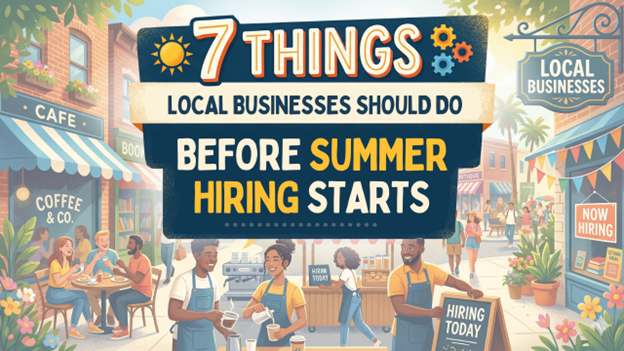
It’s getting to be that time of year again—the summer scramble for capable employees. Colleges are about to go on break. High schools will finish up soon thereafter, and eager summer employees are looking for jobs now. In the past, you probably posted a job, hired fast as fast as you could, and hoped for the best. But seasonal hiring doesn’t have to feel like a gamble. Done right, it can give you flexibility, protect your margins, and improve your customer experience. Done wrong, it creates more work than it solves. Here’s how to hire for summer without regretting it by July. Start With Demand, not Desperation Most seasonal hiring decisions are based on a vague feeling that “it’s going to get busy.” That’s not a strategy. Before you post a single job, look at last year’s numbers. When did traffic increase? Which days or hours were stretched thin? Where did service break down? Hiring should solve specific problems, not general anxiety. If Saturdays were your bottleneck, you don’t need more staff across the board. You need targeted coverage. When you hire with precision, you avoid overstaffing and protect your cash flow when business inevitably fluctuates. Hire for Flexibility, not Perfection It’s tempting to wait for the “ideal” candidate who can do everything. But in seasonal hiring, that mindset slows you down and limits your options. Instead, look for people who are adaptable, reliable, and willing to learn. A college student who can work varied shifts and pick up new tasks quickly may be more valuable than someone with years of experience who needs a rigid schedule. Summer business is unpredictable. Your team should be able to move with it. Flexibility also applies to how you structure roles. Instead of hiring for one narrow position, think in terms of coverage. Who can help at the front and jump in elsewhere when needed? That kind of cross-functionality is what keeps operations running smoothly when things get busy. Shorten the Learning Curve One of the biggest mistakes businesses make is assuming seasonal hires will “figure it out” or that the summer is short so why train them on everything. First, they won’t figure it out on their own or worse, they will… just not the way you would have preferred. Additionally, summer may be short but doing something wrong or a way your customers aren’t used to could cost you loyalty in the long run. If you want temporary employees to perform like permanent ones, you need to set them up for success quickly. That means simple, clear onboarding. Not a binder no one reads. Not a rushed walkthrough during a busy shift. Focus on the essentials. What do they absolutely need to know to do the job well in the first week? Create quick-reference guides, checklists, or short training videos. Pair new hires with someone who knows your standards and can model them in real time. The goal is speed with consistency. The faster they feel confident, the faster they become productive. Build a Team That Can Cover for Each Other Summer schedules are notoriously chaotic. Vacations, last-minute requests, and shifting availability can create constant gaps if your team isn’t structured well. This is where cross-training becomes invaluable. When employees understand more than one role, you gain flexibility without constantly adding headcount. It also reduces stress on your team. No one wants to feel like the entire operation depends on them showing up. Set the expectation early that everyone contributes to the bigger picture. When people understand how their role connects to others, they’re more willing to step in where needed. Don’t Ignore Your Core Team Here’s where a lot of businesses struggle in the first few weeks of summer. They focus so much on bringing in seasonal help that they forget about the people who keep things running year-round. Your core team is the anchor during busy seasons. If they feel overlooked, overworked, or responsible for “fixing” everything new hires don’t know, burnout isn’t far behind. Involve them in the process. Ask for input on where help is needed. Let them contribute to training. Recognize the extra effort they’re putting in. Thank them. Give them a gift card or extra day off to show your appreciation. A supported core team will elevate your seasonal staff. An exhausted one will jeopardize your business future and company culture. Think Beyond the Season Not every seasonal hire is temporary. Some of your best long-term employees will come from these short-term roles. Watch for the people who show up on time, take initiative, and connect well with customers. Those are the ones worth keeping in your pipeline. Even if you don’t have an immediate role, staying in touch gives you a head start the next time you need to hire. Seasonal hiring isn’t just about filling gaps. It’s an opportunity to build relationships and strengthen your future workforce. Use Your Chamber as a Hiring Advantage* If you’re trying to solve staffing challenges on your own, you’re doing too much. Your chamber is one of the most underused hiring tools you already have access to. Start with visibility. Many chambers offer job boards, newsletter features, and social media promotion that put your open roles directly in front of a local, engaged audience. These aren’t cold applicants scrolling job sites at midnight. These people are already connected to the business community. *Chamber Members are eligible to utilize our job board , Facebook group , and weekly newsletter to advertise job postings. These benefits are included in your membership. Priority listings are also available for additional cost; Builder-Level members and above receive complimentary listings. Questions: Office@LLchamber.com But the real value goes deeper than job postings. Chambers are constantly making introductions. That includes connections to local colleges, workforce programs , and training organizations. If you need seasonal help, part-time support, or even interns, those relationships can shorten your search dramatically. Instead of broadcasting your need into the void, you’re tapping into a network that already understands your local market. This is especially helpful when you need something more specific than “extra hands.” If your business requires certain skills, certifications, or experience, let the chamber know. Workforce development is a growing priority for many chambers, and they’re actively working to close gaps between what businesses need and what the local talent pipeline provides. That might look like partnerships with schools, targeted training programs, or initiatives designed to prepare people for in-demand roles in your area. But none of that works if businesses stay quiet about their needs. If you’re struggling to find qualified candidates, express it. If your industry has a skills gap, bring it forward. Chambers can’t build solutions in a vacuum, but they can be incredibly effective when they have clear direction from the business community. At the very least, you’ll get access to better candidates. At best, you help shape a workforce pipeline that works for your business long term. And that beats posting the same job ad three times and hoping the algorithm finally shows your listing. Sure, you can choose to do it like last year, just getting through the season. But while you’re doing the hiring work anyway, why not sure up your business’ future? Read More: Delegation Done Right: Free Yourself and Empower Your Team Hiring in a Tight Market: Your Local Playbook for Finding and Keeping Great People Simplify Seasonal Staffing Think Twice Before Hiring of Promoting "Brilliant Jerks" -------- Christina Metcalf is a writer and women’s speaker who believes in the power of story. She works with small businesses, chambers of commerce, and business professionals who want to make an impression and grow a loyal customer/member base. She is the author of The Glinda Principle, rediscovering the magic within. _______________________________________ Facebook: @metcalfwriting Instagram: @christinametcalfauthor LinkedIn: @christinametcalf5

It’s the middle of the night. Even the high achievers aren’t awake yet. But you are. Not because of a noise, but because of a number. Specifically, the number of your bank balance, and how it compares to the number required to pay your team this Friday. You aren’t alone. For small business owners, payroll isn’t just an expense; it’s someone’s mortgage payment. Their rent, their groceries, and their families depend on your ability to manage a spreadsheet. When the panic hits, swirling thoughts aren’t helpful. You need triage. You need the 2:00 AM Audit: a pragmatic, five-step checklist to shift you from paralysis to perception, and from perception to a plan. After all, worry isn’t action and that’s what you need. 1. Identify the Gap Panic makes mountains out of molehills. Wake up fully, turn on a dim light, and get the real numbers. Do not trust the "available balance" on your mobile app. It doesn't know about the three checks that haven’t cleared or the automatic SaaS deduction hitting tomorrow. Log into your actual accounting software or open your master spreadsheet. Calculate the precise amount needed for net payroll, plus payroll taxes. The Triage: What is the exact dollar amount of the shortfall? Knowing you are short $2,250 is manageable; knowing you are "short" is terrifying. 2. Isolate Incoming Cash (The "Real" Receivables). Now, look at who owes you money. Sort your accounts receivable by "Age." Triage: Ignore anyone in the "60+ days" column for tonight; they aren’t helping you by Friday. Focus only on the "Current" and "1-30 days" columns. Identify the two clients most likely to pay if given a gentle, human nudge. (Example: "Hi Jane, we are doing our end-of-month reconciliation. Any chance you could slip Invoice #104 into this week's payment run?") 3. Review Outgoing Cash (The "Can Wait" List). You cannot make money appear, but you can delay its departure. Review every expense scheduled between now and payroll day. Triage: Categorize them ruthlessly: Must Pay: Rent, utilities, essential raw materials. Can Wait: Software subscriptions that aren’t mission-critical, marketing spend, inventory that won't turn over for weeks, and—most importantly—your own owner’s draw. 4. Activate the "Last Resort" Emergency Valves. If the gap still exists after Triage #2 and #3, it's time to review your pre-approved safety nets. Triage: Check your business line of credit availability. This is exactly what it is for: smoothing out temporary cash flow valleys. If you do not have one, put "Apply for LOC" at the very top of next week’s to-do list. 5. Design the 8:00 AM Action Plan. The goal of the 2:00 AM Audit isn't to solve the problem at 2:00 AM. It's to stop the adrenaline loop so you can sleep. Write down the three things you will do at 8:00 AM: 1. Email/Call Client A regarding Invoice #X. 2. Log into the bank and defer payment to Vendor B. 3. If 1 & 2 fail by noon, draw $Y from the Line of Credit. How the Chamber of Commerce Can Help The Chamber of Commerce isn’t just for networking mixers and ribbon cuttings. We’re a powerful resilience engine for small business owners facing financial stress. If payroll anxiety is a recurring theme for you, the Chamber offers structural support to help move you from survival to stability. Financial Education and Triage Check for workshops (through the Chamber or partners like SBDC or SCORE) on cash flow management, anticipatory accounting, and fractional CFO services. These sessions are designed to teach you how to predict a payroll shortfall three months out, rather than three days out. Access to Capital and Lenders Through its network, the Chamber connects members with local banks, credit unions, and alternative lenders who specialize in small business needs. Chamber membership can give you a warmer introduction to loan officers who understand the local economic landscape and can help you secure that essential line of credit before you need it. Mentorship and Vetted Professionals Chambers provide access to mentorship programs (like SCORE) or a directory of vetted, reputable local CPAs and bookkeepers. Sometimes, the best way to solve payroll worry is to pay a professional to manage the daily cash, freeing you to focus on the strategy that generates it. Read More: The Hidden Cash Sitting In Your Business (And How to Find It) Money Management Tips for People Who Hate Money Management A Practical Guide to Funding Your Small Business with Business Loans and Beyond Small Business Administration - Manage Your Business Small Business Resource Round-up Check out these Chamber Businesses for: Financial Advisors & Accountants Payroll -------------- Christina Metcalf is a writer and women’s speaker who believes in the power of story. She works with small businesses, chambers of commerce, and business professionals who want to make an impression and grow a loyal customer/member base. She is the author of The Glinda Principle, rediscovering the magic within. _______________________________________ Facebook: @metcalfwriting Instagram: @christinametcalfauthor Substack: @christinametcalf LinkedIn: @christinametcalf5

If you’re a small business owner, you probably didn’t wake up one morning and declare, “Today, I’m going to be an executive.” That would’ve required time for reflection and who has that when you’re running a business? Most entrepreneurs don’t get that luxury. One day you’re making the thing, selling the thing, fixing the thing, or delivering the service. The next day you’re managing schedules, answering payroll questions, resolving customer issues, and trying to figure out why the printer refuses to cooperate with the accounting software. Somewhere along the way, you stopped being the person who does the work and became the person responsible for making sure the work happens. This is the moment many small business owners quietly become what could best be described as the Accidental Executive. You may never call yourself a CEO. In fact, most owners of small and mid-sized businesses would laugh at the idea. But if you’re overseeing staff, coordinating multiple functions of the business, making financial decisions, and setting direction for the future, you’re already operating at an executive level whether the title exists or not. The Maker Phase Nearly every small business begins in what could be called the “maker phase.” A person has a skill, a craft, or a service people want. A baker opens a shop. A contractor starts taking on projects. A designer begins freelancing. A consultant lands their first few clients. In this phase, success comes from being good at the work itself. You’re the engine of the business. If you stop producing, the business stops moving. You’re also trading time for money and since there is a limited number of hours in the day, you can only grow so much under that structure. For many entrepreneurs, this stage feels natural. The work is familiar. The results are visible. Effort goes in and something tangible comes out. But there is another dynamic at play in those early days. Most of your first customers aren’t buying because of a sophisticated marketing plan. They buy because they know you. They trust you. Someone recommended you. Maybe they met you through a community group, a chamber event, or a mutual connection. You shake their hand. You show up personally. You solve their problem. Those early relationships become the foundation of the business. They lead to repeat customers and referrals. In the beginning, your reputation travels faster than your marketing. Then something interesting happens. Customers start showing up more often. The business grows. And suddenly you can’t do everything anymore. The First Hires Change Everything Hiring the first employee is a proud moment. It signals growth and momentum. But it also quietly shifts your role. Now someone needs direction, training, and feedback. There are schedules to approve, paychecks to process, and questions to answer. Multiply that by three, five, or ten people and the nature of the job changes entirely. The owner is no longer producing the work. You’re coordinating it. Many business owners still think of themselves as the primary worker in the business even after this shift happens. But if your day is filled with conversations, decisions, troubleshooting, and planning instead of the original craft, the role has already changed. You are no longer the maker. You’re the person running the operation. And you need to make that transition if you want to grow. When Clients Miss Seeing You There is another subtle shift that often surprises growing businesses. In the early days, customers bought directly from you. They saw you on every visit. You answered the phone and handled the details. You were the face of the service. As the business grows, that changes. Employees begin doing the work. New team members show up at client sites or in the store. You become the person overseeing the business rather than the person performing the service. Often longtime clients feel that change. They might say something like, “We never see you anymore,” or “We miss working with you.” It’s not necessarily a complaint. It’s simply a reflection of change and people don’t always like change. The client trusted you personally, and now the relationship is shifting from a one-to-one connection to a relationship with the company. For many owners, this moment feels uncomfortable. It can create a sense that something important is being lost. But it doesn’t have to be. The key is making sure the client’s trust transfers from you to the organization. One simple way to do this is to intentionally introduce your team as an extension of you. Let clients know who will be working with them and why you trust that person. Share their strengths. Position them as capable professionals, not just employees filling in for the owner. At the same time, maintain a visible presence in the relationship. A quick check-in call, a brief email after a project, or an occasional visit can reassure clients that you are still engaged and accountable. You may not be doing the work personally anymore, but they are still guaranteeing the quality of the work. The Uncomfortable Truth This stage can feel frustrating because the skills that made you successful early on are no longer the skills the business needs most. Being a great mechanic does not automatically prepare you to manage technicians, negotiate vendor relationships, and analyze pricing strategies. Being a talented photographer does not immediately translate into managing a studio schedule, marketing campaigns, and customer service policies. Running a growing business requires a completely different set of abilities. Leadership. Communication. Delegation. Decision-making. Strategic thinking. These are executive-level skills, even if the business only has a handful of employees. The uncomfortable truth is that many owners are never formally taught how to make this transition. Most are figuring it out in real time while trying to keep the business moving forward. Why This Transition Matters When business owners don’t recognize their role has changed, they often continue trying to operate as the primary worker while also managing the entire organization. That combination rarely works for long. Owners become overwhelmed. Employees feel micromanaged and confused about their role. Recognizing the shift from maker to accidental executive allows owners to approach their role differently. Instead of trying to do everything personally, the focus moves to building systems, developing people, and creating structure that allows the business to operate effectively. Your work becomes less about personal output and more about guiding the entire operation. Over the course of your business’ lifetime, your role will likely transition several times from doer to manager to executive leadership where operational duties fall to others. The Chamber Can Help This is exactly where business networks and community support become valuable. Many small business owners are navigating these leadership shifts. Connecting with other business owners provides perspective that cannot be found inside the walls of your company. Conversations at networking events, leadership programs, workshops, and peer groups often reveal something powerful. Nearly everyone is figuring it out as they go. Hearing how other owners approached hiring, delegation, growth, and leadership challenges can shorten the learning curve dramatically. The chamber environment creates space for those conversations to happen (and sometimes the leadership training too). The Title Isn’t the Point Whether someone calls themselves an owner, founder, partner, or president does not really matter. What matters is recognizing the moment when the business begins requiring executive-level thinking. Once you shift from doer to manager (or exec), the path forward changes. The goal is no longer simply doing the work well. The goal becomes building a business where many people can do the work well and thrive. That’s the real difference between doing a job and leading an organization. Read More: Business.com First Time Hiring Guide Is Your Business Owner-Dependent? How to Build a Culture People Want to Be a Part of Succession Planning Workbook - a resource for planning. Created to help you identify key people/positions that should have redundancies in place and help get a guideline for training and replacements. Free for Chamber Members. ----------- Christina Metcalf is a writer and women’s speaker who believes in the power of story. She works with small businesses, chambers of commerce, and business professionals who want to make an impression and grow a loyal customer/member base. She is the author of The Glinda Principle , rediscovering the magic within. _______________________________________ Facebook: @tellyourstorygetemtalking Instagram: @christinametcalfauthor LinkedIn: @christinametcalf5