Chamber Year in Review: 2023

Lauren Batchelor • December 20, 2023

We’ve done quite a bit over the past twelve months- thank you members! Take a look at our Top Hits and see where we’ve been:


Member directory hits grew to match pre-covid numbers, and member link-outs have surpassed all years since the website started (2015). ‘Hits’ refers to the number of people who have visited a business’s directory listing, and ‘Link-Outs’ refers to when a visitor clicks the link to a directory listing’s website or social media. As we make improvements to our website, we aim to increase these numbers and make our directory a known place for people to find local businesses and organizations.


Our County Events Calendar has also increased in views. In fact, we have 13 times the number of views in 2023 compared to 2022. As we continue to increase awareness and reach, we hope to see this amount increase in 2024. (PS- this is open to all events in Leavenworth County. If your organization has an event open to the community, please send the information to: Office@LLChamber.com)


With a note of thank to our Ambassadors, we also held 43 Ribbon Cuttings for our members this year, celebrating new memberships, new businesses, completed renovations, and finishing a massive project to make finding land records incredibly easier. (If you are a Chamber Member interested in a Ribbon Cutting for a milestone, please email: Office@LLChamber.com)


The Women’s Division of the Chamber awarded five amazing young ladies Scholarships this May, raised over $6000 for Scholarships at their Lip Sync Battle, and awarded Marcia Irvine their annual Athena Award. (Watch a short overview video here.) With over 70 members, we encourage you to get involved and attend a Women’s Division Luncheon in 2024.


Our Government Affairs Committee has been running along quite steadily as well. They conducted candidate forums for both Lansing & Leavenworth. In an effort to reach more people, these forums were livestreamed and are still available for viewing on the Chamber YouTube channel.


Operation International has had a great year of working to bring together International families stationed at Fort Leavenworth with the greater community. They are always looking for people to sponsor families! Be sure to check out their page and learn more- applications open in April, so you have time to learn if this is the program for you! Take a moment and watch their 2023 in Review video here.

While our 2023-2024 Leadership Leavenworth-Lansing Class is still in-session, the 2022-2023 class created a video to highlight Community Non-Profits. Watch (and share!) here. If you’d like to learn more, please visit our LLL page here. Applications open mid-June, and the Class is once a month. It’s a great way to get Leadership experience, get involved in the community, and learn more about our region and the various aspects that make it run.


We’d be remiss to leave out the Military Affairs Council. They generally meet once a month, with the goal of connecting local businesses and leaders to Fort Leavenworth and their leaders. The Cities of Lansing, Leavenworth, and Fort Leavenworth are all one continuous community and interwoven, so it is important to make sure there is always an open line of communication. Check out their webpage and watch the calendar for dates.


It has been a fantastic year working with our members and for our community. We hope to continually improve our services, better support our members, and make our community the best it can be. We hope to see you all in 2024 as continue- Forward As One Community.


May 19, 2026
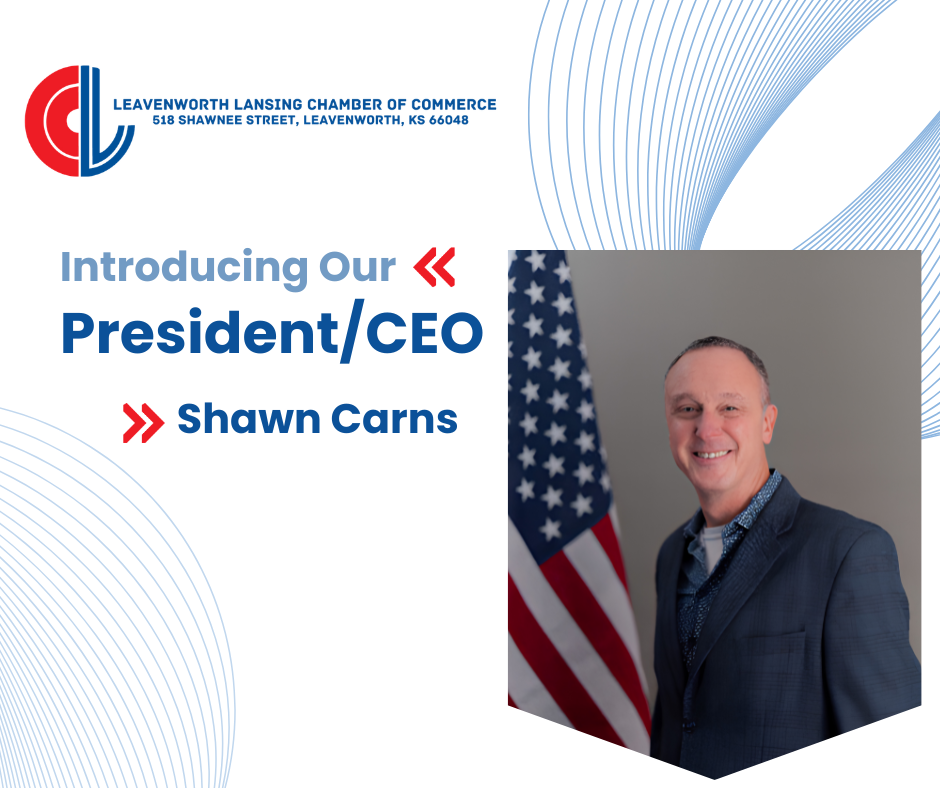
Introducing our new President/CEO Shawn Carns
May 18, 2026
Most businesses don’t lose their edge in one dramatic, cinematic moment. They lose it quietly. A tweak here. Following a trend there. A consultant recommendation that sounds smart but doesn’t fit. A few AI-generated ideas pasted into the marketing plan with the confidence of someone assembling furniture without looking at the directions. Before long, something feels off. The business’ personality is flatter. The message sounds like everyone else’s. The thing that made people choose them has been polished, sanded, and lacquered in beige. That “thing” that makes you who you are is aptly called your unique value proposition (UVP). It’s the combination of what you offer, who you serve, how you serve them, and what you share about the “why” behind what you do. It’s what sets you apart and entices people to buy from you or visit your business over others. A strong UVP breeds loyalty. And yes, businesses kill it by accident all the time. Here are some of the most common ways it happens so you can watch out for it happening to yours: Listening to Advice From People Who Don’t Understand Your Market Marketing experts and business consultants can be incredibly helpful. Fresh perspective works because outside expertise can uncover problems you’ve been too close to see. But a consultant who doesn’t understand your audience can accidentally steer you away from the very thing that makes your business special in the eyes of your customers. A trendy, high-end rebrand might make sense for a luxury market, but it could alienate customers who love you because you’re approachable, familiar, and practical. A polished “curated experience” might sound sophisticated on paper and what “everyone is doing” but if your customers come to you because they feel known, welcomed, and part of a family, removing that warmth isn’t a strategy. It’s a fast train to “It’sJustNotTheSameVille.” Good advice should sharpen your difference, not erase it. Chasing Trends That Don’t Fit Your Audience Every industry has trends. Minimalist branding. TikTok-style videos. Subscription models. Luxe packaging. AI chatbots. “Experiences.” Founder-led content. Ultra-casual copy. Ultra-polished copy. Whatever LinkedIn is currently pretending it invented. Some trends are useful and some are noise. The danger to your business comes when you adopt a trend because everyone else is doing it, without asking whether your customers want it. For instance, if your audience values speed, don’t make everything more elaborate and wordier. If they value personal service, don’t automate every touchpoint. If they value affordability, don’t redesign your offer to feel exclusively high-end and then act shocked when your regulars disappear. A trend should serve your customer relationship. It should never become the new boss of your brand. Using AI Randomly Instead of Strategically AI can help a business get smarter, faster, and more consistent. It can help draft emails, organize ideas, summarize customer feedback, outline campaigns, brainstorm offers, and speed up routine tasks. But randomly asking AI questions is not the same as making AI part of your business. If you use it without teaching it your audience, offers, tone, standards, objections, FAQs, and customer journey, you’ll get generic output. Generic output leads to generic messaging. Generic messaging makes you sound like every other business trying to “elevate solutions.” AI works best when it’s treated like a trained assistant, not a slot machine for copy. Don’t use it hoping it will yield million-dollar results. Give it context. Build repeatable prompts. Feed it examples of what you like/want. Review the output. Protect your voice. Otherwise, you’ll sound like a bot and cost yourself additional time editing. That’s not very efficient. Becoming More Generic to “Grow” As businesses grow, they often try to appeal to more people. Cast a wide net, catch more customers, right? While that makes sense to a point, trying to attract everyone can make your message so broad and bland that it speaks to no one. For example, a business known for serving busy parents may water down its message to reach “families, professionals, individuals, and the community” because it seems like there are only a limited number of “parents.” A boutique service provider may stop naming the exact problems clients bring them because they don’t want to sound too narrow. A restaurant known for its decadent sausage gravy may redesign its menu because they realized heart disease is the number one killer in the US, and they thought they should remove the fat and switch to a healthier menu. While it may attract new customers, it will lose those who love their comfort food. Growth should expand opportunity. It shouldn’t require a personality transplant. Copying Competitors Too Closely Keeping an eye on competitors is smart. Copying their offers, language, pricing structure, content style, and customer experience is where you’ll run into trouble. You don’t know why a competitor is doing what they’re doing. Maybe their strategy is working. Maybe it’s failing loudly behind the scenes. Maybe they copied someone else because they “had to do something.” Maybe this is a Hail Mary pass in the last few seconds of the game and they’re just hoping to move the marker. Competitor research should help you find gaps. It should help you understand where you can stand apart. If it turns you into a slightly different version of another business, you’ve traded distinction for something else entirely. Forgetting to Talk to Real Customers Your customers will tell you what makes you different, but only if you keep listening. Businesses often make changes based on internal opinions, industry chatter, or the loudest person in the room. Meanwhile, customers are giving clues every day. They mention why they came back. They name the employee who made the experience better. They compliment the thing you barely noticed. They complain when something meaningful disappears. Pay attention to repeat phrases in reviews, emails, conversations, referrals, and testimonials. Your strongest positioning and ideas to meet customers needs are often hiding in plain sight. Over-Professionalizing the Brand There’s nothing wrong with looking polished. But polished should never mean sterile. Some businesses scrub away personality because they think professionalism requires sounding bigger, colder, or more formal. They replace specific language with vague industry terms. They remove humor. They bury warmth. They stop sounding like humans and start sounding like a committee circling back and drilling down because bandwidth requires a game-changing pivot—a bunch of empty, overused words. Professionals and brands have personalities and the best brands feel trustworthy and recognizable. Your unique value proposition is not a slogan you write once and tape to the wall. It should guide your decisions, messaging, customer experience, hiring, technology, partnerships, and growth. Before you follow the next trend, hire the next expert, or hand your voice to AI, ask one question: Will this make us more clearly ourselves to the people we’re here to serve? Read More: Are You Accidentally Repelling Perfect Clients? Embracing Imperfection to Strengthen Your Business The Hidden Shift Every Growing Business Owner Faces Your Business Isn't Too Small to Build a Brand ------------------------- Christina Metcalf is a writer and women’s speaker who believes in the power of story. She works with small businesses, chambers of commerce, and business professionals who want to make an impression and grow a loyal customer/member base. She is the author of The Glinda Principle, rediscovering the magic within. _______________________________________ Facebook: @metcalfwriting Instagram: @christinametcalfauthor LinkedIn: @christinametcalf5
May 11, 2026
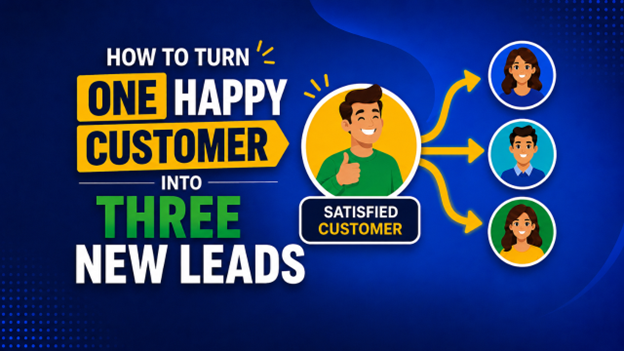
Hopefully, your happiest customers are already doing some marketing for you. Maybe they’re mentioning your business to a neighbor or tagging you in a post. Perhaps they’ve told a friend, “You should call them.” The problem is that most small businesses leave those moments to chance and probably don’t even know about them. That’s why you must make referral marketing part of your marketing goals. Referrals are powerful because they come with built-in trust. A stranger clicking an ad may be curious. A person recommending your business to a friend is handing you a warm lead. That’s worth building a simple system around. You don’t need a huge budget or a complicated referral program. You just need a few repeatable habits that make it easy for happy customers to send more people your way. Ask at the Right Moment Start by knowing when to ask. Timing matters. The best moment is usually right after a customer has had a positive experience. Maybe they compliment your team. Maybe they leave a great review. Maybe they reorder, renew, rebook, or tell you how much something helped them. That’s your opening. Instead of saying, “Let us know if you know anyone,” which puts all the work on them, be specific. Try something like: “If you know another business owner who could use help with this, I’d be grateful if you’d send them my way.” Or: “We love working with customers like you. If you have a friend or colleague who needs this, feel free to share our contact info.” Specificity helps people think of someone. Or tell them the why you need referrals. People are more likely to help when you tell them why you need it. “We’re a small business and we get most of our clients through referrals. We would appreciate you telling your friends and family about us.” This helps them understand how important referrals are to you, but it also tells them that many people have referred you (“We get most of our clients through referrals.”)—that’s social proof. Make Referrals Easy to Share Next, make referrals easy to share. Create a short blurb customers can forward by text or email. Keep it conversational. For example: “I’ve been working with [Business Name], and they’ve been great. They help with [specific service/product], and I thought of you because [reason]. Here’s their info.” You can also create a simple referral card, QR code, or web page with your contact information, top services, and a clear explanation of who you help. If someone has to hunt for your phone number, website, or booking link, you’re making them work too hard and few people will do that. Turn Conversations into Warm Introductions Another quick win is to ask for introductions in person, especially at events. If a customer, vendor, or fellow business owner says they know someone you should meet, ask whether they’d be comfortable making the connection. A warm introduction is stronger than a cold email. It gives the other person context and makes the conversation feel less transactional. This is where your chamber can become a practical business development tool. Chamber events aren’t only for showing up, shaking hands, and collecting business cards you’ll later find in your purse, car, or desk drawer like tiny rectangles of guilt. Used well, they can help you build a smarter referral network. Use the Chamber as a Connection Partner Before attending an event, think about who you want to meet. Are you hoping to connect with real estate professionals, restaurant owners, nonprofit leaders, healthcare providers, employers, young professionals, or city leaders? Reach out to the chamber and ask which events tend to attract those groups. Many chambers know the personality and audience of each gathering. A morning coffee may draw a different crowd than a women’s leadership event, an industry roundtable, a ribbon cutting, or a large signature event. Your chamber may also be able to make direct introductions. If you’re looking to meet a certain demographic, ask. That’s part of the relationship-building advantage of membership. Chamber staff often know who’s growing, who’s hiring, who’s collaborating, who’s new to the community, and who might be a strong connection for your business. Follow Up Before the Lead Goes Cold Once you make a connection, follow up quickly. Within 24 to 48 hours, send a short note. Mention where you met, reference something specific from the conversation, and suggest a next step if it makes sense. Don’t overcomplicate it. A good follow-up might be: “It was great meeting you at the chamber event yesterday. I enjoyed hearing about your expansion plans. If you ever need help with [specific need], I’d be happy to be a resource.” Track What’s Working Finally, keep track of referrals. A simple spreadsheet or notes field in your CRM is enough. Track who referred whom, when you followed up, and whether the connection became a customer. This helps you thank people properly and see which relationships are generating real business. The best referral strategy isn’t pushy. It’s prepared and focused. You’re making it easier for people who already trust you to open the next door. Take the Next Step Look at the chamber calendar and see what’s coming up next. Then reach out to the chamber before you attend. Let them know who you’re hoping to meet. The right event, the right introduction, and one happy customer can turn into your next three leads. Read More: How to Stop Being the Best-Kept Secret in Town How to Turn Small Talk into Big Opportunities The Referral Engine: How to Get People Talking About Your Business The Referral Revival: 5 Proven Ways to Get More word-Of-Mouth Without Ever Asking -------------------------- Christina Metcalf is a writer and women’s speaker who believes in the power of story. She works with small businesses, chambers of commerce, and business professionals who want to make an impression and grow a loyal customer/member base. She is the author of The Glinda Principle , rediscovering the magic within. _______________________________________ Facebook: @metcalfwriting Instagram: @christinametcalfauthor LinkedIn: @christinametcalf5